GSA SER Contextual Backlinks
Understanding GSA SER Contextual Backlinks
GSA Search Engine Ranker remains one of the most formidable automated link building tools on the market, and its ability to generate GSA SER contextual backlinks sets it apart from simple directory or comment spammers. Unlike profile links or forum signatures that often sit in isolated blocks, contextual backlinks are embedded directly within relevant textual content, making them significantly more valuable for search engine optimization.
What Are GSA SER Contextual Backlinks?
Contextual backlinks created by GSA SER are hyperlinks placed inside the body of an article, blog post, or web page, surrounded by relevant text. The software identifies platforms that allow content posting—such as article directories, web 2.0 blogs, social networks, and certain CMS sites—and publishes readable articles containing your link. When properly configured, these links appear natural because they form part of a coherent sentence or paragraph, rather than floating in a sidebar or footer.
How the Software Generates Contextual Links
The engine scrapes target sites based on your chosen platforms and keywords. It then constructs content using spun articles or imported text, embedding your anchor text at natural insertion points. The result is a link that search engines interpret as an editorial recommendation within the page’s main content, carrying far more weight than links from non-contextual areas.
Key Benefits of Contextual Links via GSA SER
- Higher link juice flow: Links from within the body content pass more authority because they sit in the primary HTML container, often surrounded by semantically related terms.
- Improved relevance signals: The surrounding text helps search engines understand the topical connection between the source page and your destination URL.
- Natural link profile diversification: Mixing contextual links with other link types mimics organic growth patterns, reducing footprint risks.
- Potential for tiered indexing: Contextual pages often get indexed faster, making them ideal as Tier 1 properties that point directly to your money site.
- Better click-through potential: Even if SEO is the primary goal, readers who encounter a relevant link within an article may actually follow it.
Platforms That Deliver Contextual Placements
Not every platform GSA SER submits to produces a contextual backlink. To maximize your ratio, prioritize engines and targets that allow in-content publishing:
- Web 2.0 blogs (WordPress.com, Blogger, Tumblr, Medium clones)
- Article directories that still preserve body-content links
- Social bookmarking sites with description fields that render as full paragraphs
- Document sharing platforms where descriptions appear above the fold
- Certain wiki platforms that accept article-style entries
- CMS comment systems that approve comments with hyperlinked text (though these are lower quality)
more info
Configuring GSA SER for Maximum Contextual Output
To ensure you are building genuine GSA SER contextual backlinks, your project settings must be dialed in precisely:
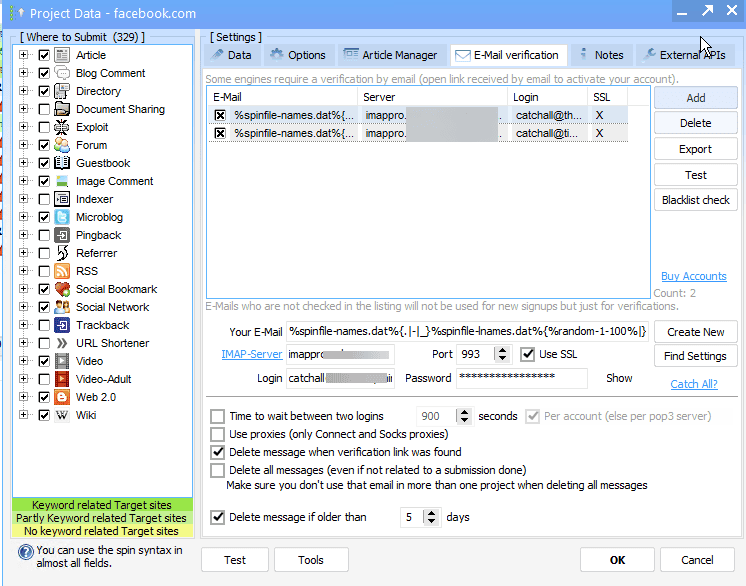
- Enable platforms that support "Article" or "Blog" posting types, and disable low-value engine groups like "Guestbook" or "Image Comment" unless needed for filler.
- Feed the tool high-quality, uniquely spun article content with multiple paragraphs. Poor content gets rejected or results in links placed in excerpts that may not be fully contextual.
- Use the "Article Manager" to create content variations where your link appears naturally mid-paragraph, not just at the end.
- Set anchor text distribution to include generic, branded, naked URL, and LSI (latent semantic indexing) variations to reinforce contextual relevance.
- Activate the option to insert links only in the main body where possible, if your verified target sites support it.
- Utilize the “Search Engine Referrer†and “Indexing†features to improve the crawl rate of the pages hosting your contextual links.
Best Practices for Sustainable Results
Blasting thousands of unverified contextual links can trigger algorithmic filters. A measured approach protects your site while building authority:
- Always filter verified links and keep only those from pages that are actually indexed and contain your link in the body.
- Build Tier 2 and Tier 3 links pointing to your contextual Tier 1 properties to boost their authority, rather than sending everything directly to your money site.
- Mix GSA SER contextual backlinks with other link types—guest posts, niche edits, and earned editorial links—to maintain a natural footprint.
- Regularly update your target lists and remove dead or penalized platforms using the tool’s filtering options.
- Monitor velocity; a sudden spike in contextual links is unnatural. Use the scheduler to drip-feed submissions over time.
Common FAQs About GSA SER Contextual Backlinks
Are GSA SER contextual backlinks safe for a new website?
They can be, provided you start slowly and direct them through a buffer layer. Sending hundreds of contextual links to a fresh domain with no other signals looks suspicious. Use a tiered linking structure where these contextual links hit Web 2.0 properties, which then link to your money site.
What is the difference between a contextual link and a non-contextual link in GSA SER?
A contextual link resides inside the main content area of a page, surrounded by text. Non-contextual links include those in headers, sidebars, footers, comment signatures, or profile pages. While GSA SER can build both, the contextual variety carries dramatically more SEO weight because it constitutes an editorial mention within the page’s primary topic.
Can I rank with only GSA SER contextual backlinks?
It’s possible in low-competition niches, but risky as an isolated strategy. Search engines evaluate the entire link profile. Contextual links from automated tools, while powerful, should complement higher-quality manual outreach links, social signals, and on-page excellence. Relying solely on automated links leaves a detectable pattern.
How do I verify that my links are truly contextual?
Use the verified link checker within GSA SER or export your verified URLs to a crawler like ScrapeBox. Inspect the HTML of the live page and check if your link sits within a
or
What kind of content works best for contextual link building?
Readable, human-style spun articles outperform garbled gibberish. Aim for at least 300 words per article with logical paragraph breaks. The software places your link more effectively when the content contains multiple coherent sentences. Niche-relevant spun content, updated regularly, improves acceptance rates and the contextual strength of the resulting backlink.
Do contextual backlinks from low Domain Authority sites still help?
Yes, in volume and when properly tiered. A single low-DA contextual link may not move the needle, but hundreds of them built over time, coupled with Tier 2 links that boost those page’s authority, can meaningfully influence rankings. They also contribute to overall domain authority, anchor text diversity, and indexation velocity.